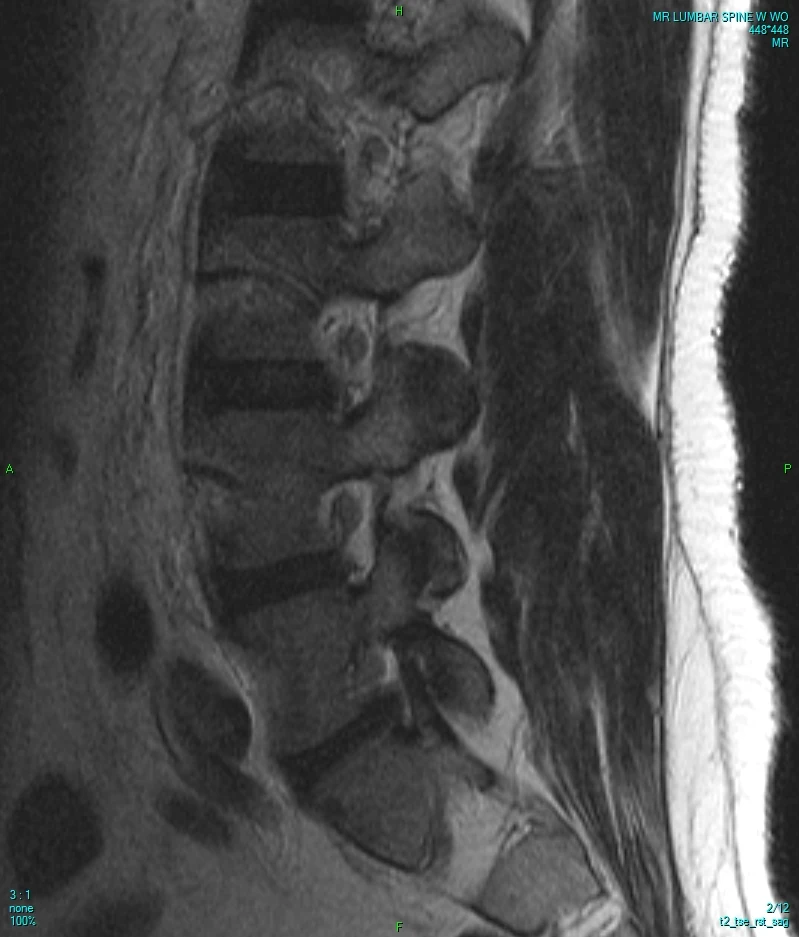

If a surgeon has recommended lumbar fusion or decompression, you may still be sorting out which symptom the operation is meant to improve and what the images show. A second opinion can help you understand the recommendation. It can also agree with it.
On this page
Most herniated disks don’t need surgery What one second-opinion study found Six questions before a lumbar operation How an online second opinion works Quick answers Sources Keep readingMost herniated disks don’t need surgery
The American Academy of Orthopaedic Surgeons says that even though a herniated disk can be very painful, most people feel better within a few weeks or months without surgery, and only a small share need an operation. Surgery is usually recommended after nonsurgical treatment hasn’t helped, or sooner for muscle weakness, trouble walking, or loss of bladder or bowel control.
Those last symptoms are urgent. New loss of bladder or bowel control, or weakness that is getting worse, needs to be seen right away, not by a written opinion.
What one second-opinion study found
A 2017 study followed 485 people in a Brazilian second-opinion program after spine surgery had been recommended. The second evaluation differed from the first diagnosis in 59.8% of participants. It was a selected group in one health system, and some participants did not complete the full review. That percentage does not predict what a second surgeon will say about your case.
Six questions before a lumbar operation
- What is the exact operation being proposed?
- Which symptom is it meant to improve, and which image finding supports that plan?
- What improvement is reasonably expected, and what remains uncertain?
- Which nonsurgical options have I tried, and which are still reasonable?
- What changes if I wait, and what symptoms should prompt urgent evaluation?
- What would another surgeon need to review before offering a useful opinion?
Bring the source records: the original MRI or CT images, the radiology report, the proposed operation, relevant clinic notes and a brief list of treatments already tried. A report alone may not answer which level or side should be treated. Our guides explain common MRI terms and how to get the original images.
How an online second opinion works
You provide the original images, report, recommendation and relevant history. When a qualified reviewer is available for your state and question, you can choose that surgeon, see the price and submit the case. The surgeon may provide a signed written opinion and one clarification question within 30 days. A written review cannot perform a physical examination or settle every uncertainty; the reviewer may recommend an in-person evaluation or more records.
Quick answers
What should I ask before a lumbar operation?
Ask which symptom the proposed operation is meant to improve, which image finding supports it, what other reasonable options exist, and what might change if you wait.
Can a spine second opinion be done online?
A surgeon may be able to review your original images, report, recommendation and history remotely and give a written opinion. It does not replace an examination when one is needed.
What records should I gather?
Gather the original MRI or CT images, the radiology report, the proposed operation, relevant clinic notes and a short list of treatments you have tried.
Considering a lumbar surgery recommendation?
Join the free Texas interest list while we prepare the spine pilot. Before you submit a case, we will show the named reviewer, accepted questions, price and availability.
Join the BoneArc Second Opinion waitlist →Sources
- AAOS OrthoInfo: Herniated disk in the lower back
- AAOS OrthoInfo: Lumbar spinal stenosis
- Lenza et al., Second opinion for degenerative spinal conditions, BMC Musculoskeletal Disorders 2017