General information to help you prepare for a conversation with your clinician.
Maybe you went in hoping for an explanation for your shoulder pain. Now you’re reading about anchors, slings and time off work. Before you get lost in the recovery details, there’s an earlier conversation to have: what kind of tear is this, and why is repair being recommended for you?
On this page
Not all tears are the same What the research shows Tears that deserve a faster look Questions worth asking Quick answers What did we miss? Sources Keep readingOne question to bring with you“What makes you recommend repair now rather than another treatment first?”
Not all tears are the same
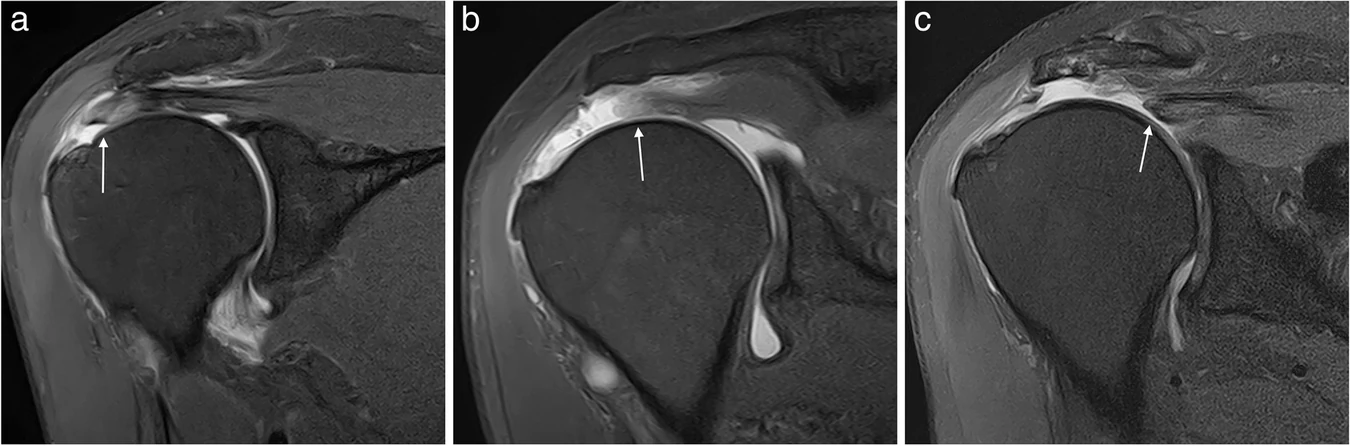
The rotator cuff is a group of four tendons that keep your arm centered in the shoulder socket. Surgeons sort tears by a few things that change the answer a lot.
- Partial or full thickness. A partial tear is a fraying or a partial thickness defect. A full-thickness tear goes all the way through the tendon.
- Sudden or gradual. A tear after a fall or a heavy lift with immediate weakness is different from a tear that built up over years.
- Size and which tendon. Small tears in one tendon behave differently from large tears involving several.
- Your age, job and goals. A 28-year-old climber and a 68-year-old who mostly needs to reach a shelf are different decisions.
Cuff tears also become more common with age, and many of them cause little or no pain.
What the research shows
A three-way randomized trial from Finland followed 180 shoulders with painful, non-traumatic supraspinatus tears, average age 65. One group did physiotherapy alone, one had acromioplasty plus physiotherapy, and one had a full rotator cuff repair plus acromioplasty and physiotherapy.
At two years there was no significant difference in pain or function between the groups. The repair group had a smaller tear on follow-up imaging, and the surgical options cost significantly more. The authors concluded that non-operative treatment is a reasonable option for people 55 and older with this kind of tear.
That trial studied gradual tears in older adults. It does not say surgery is wrong for everyone, and it does not cover a sudden, traumatic tear.
Tears that deserve a faster look
- A sudden tear after a fall or injury, with immediate weakness or an arm you cannot lift.
- A larger tear in a younger or very active person, where waiting can make a repair harder.
- Pain and weakness that are getting steadily worse, not better, despite a few months of rehab.
If any of these sound like you, get in front of a shoulder surgeon soon. A second opinion can still happen alongside that, as long as you are not delaying care.
Questions worth asking
- Is this tear partial or full thickness, and how large?
- Is it from an injury or from wear over time?
- What happens if I do physical therapy for three months first?
- If you recommend repair, how likely is it to heal at my age, and what is the recovery like?
- Which of my symptoms would the surgery fix, and which would it not?
Quick answers
Will a rotator cuff tear get worse if I do not fix it?
Some do, some stay stable for years. Larger tears and sudden tears are more likely to need prompt treatment. Your surgeon can tell you which kind you have.
Can physical therapy fix a rotator cuff tear?
It does not close the tear, but in the trial above it improved pain and function about as much as surgery over two years for gradual tears in people over 55.
How long should I try rehab before deciding?
That varies. Many surgeons suggest a few months of structured therapy for a gradual tear, unless the tear is large, sudden or getting worse.
Want a surgeon to look at your scan?
BoneArc Second Opinion is a written opinion from an orthopedic surgeon on the X-ray, MRI or CT you already have. It is opening soon. Join the free waitlist and we will email you when it opens in your state.
Join the BoneArc Second Opinion waitlist →What did we miss?
If there’s a question you wish this guide answered, suggest a topic. Keep it general; please don’t email scans or personal medical information.
Sources
- AAOS OrthoInfo: Rotator cuff tears
- Kukkonen et al., JBJS 2015: Treatment of nontraumatic rotator cuff tears, a randomized controlled trial with two years of follow-up